Fotona 4D Laser Facial (TimeWalker) for Brighter, Smoother Complexion
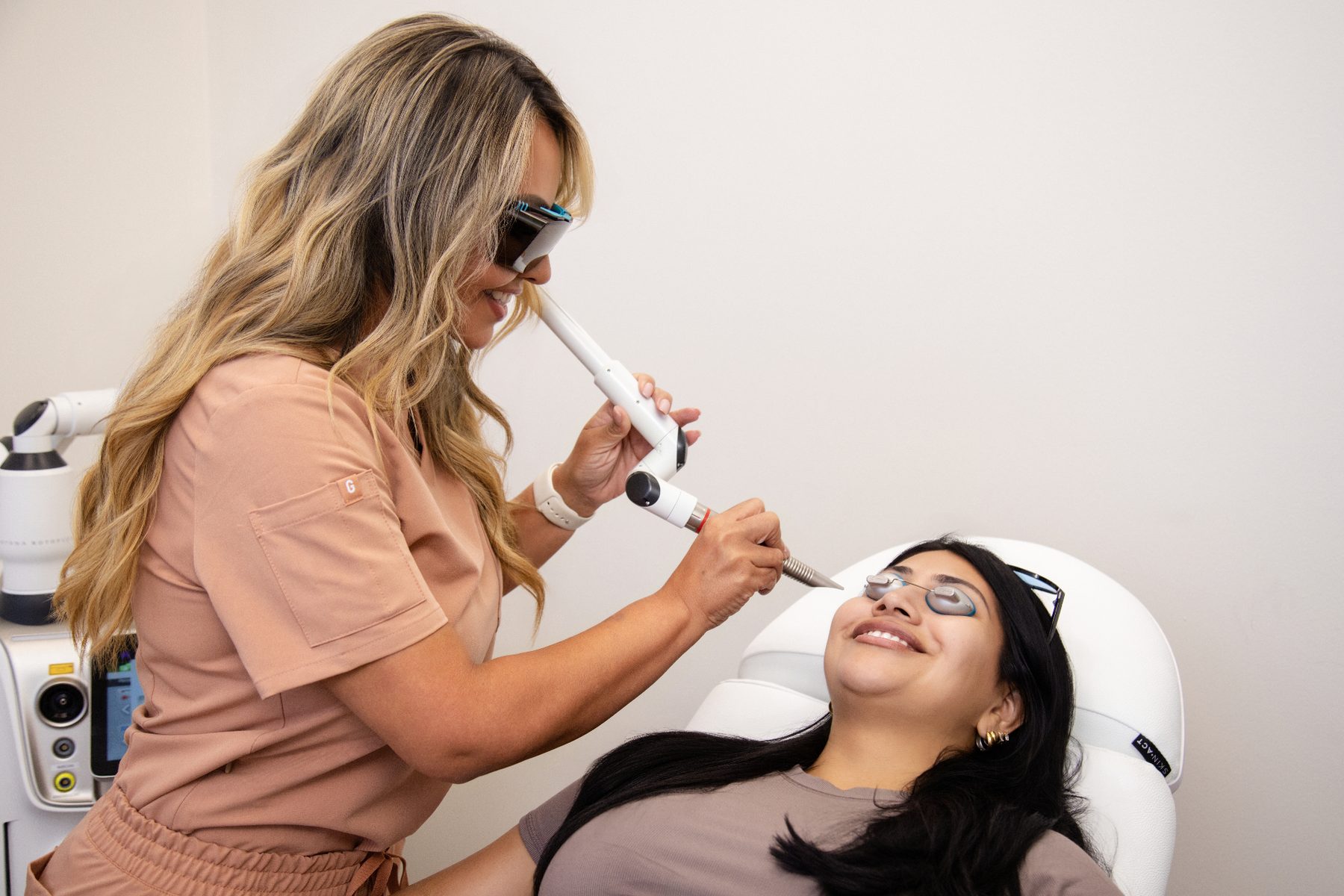
Walk into any aesthetic clinic long enough and you will hear the same request phrased a dozen different ways: people want skin that looks fresher, tighter, more even, and less tired, but they do not want to disappear for two weeks while their face peels. That tension, between meaningful change and manageable downtime, is exactly why the Fotona 4D Laser Facial (TimeWalker) has become such a frequent point of discussion.
This is not a single-pass facial in the spa sense of the word. It is a multi-step laser treatment designed to improve tone, texture, laxity, and overall skin quality through a sequence of complementary modes. The appeal is easy to understand. Instead of chasing one issue in isolation, it approaches the face more globally. Fine lines, early laxity, roughness, enlarged pores, and dullness often show up together, especially once collagen turnover starts to slow. Treatments that address only the surface can leave deeper aging changes untouched. Treatments that go too hard can create more downtime than many patients can realistically tolerate.
The TimeWalker platform, depending on how a clinic configures the session, allows practitioners to combine internal and external laser steps using Fotona’s Nd:YAG and Er:YAG technologies. That combination is the heart of the treatment. One phase works from inside the mouth to heat tissue and support tightening, while other phases target deeper dermal remodeling and more superficial resurfacing. When performed thoughtfully, the result is often less about looking dramatically different and more about looking rested, smoother, and quietly polished.
What the treatment actually is
The name “4D” is not just marketing shorthand for “more powerful.” It refers to four distinct treatment dimensions or steps, each aimed at a different tissue depth or concern. Clinics may tailor the exact sequence, settings, and intensity based on skin type, age, sensitivity, and goals, but the broad idea stays the same.
The first step often takes place inside the mouth, along the cheeks and sometimes around the lips. This surprises first-time patients, but it is one of the reasons the treatment stands apart from a standard laser facial. By heating the mucosal tissue from the inside, the practitioner can stimulate collagen contraction and remodeling in areas that contribute to lower-face softness and nasolabial fold prominence. Patients often describe this phase as unusual rather than painful, more warm and pressurized than sharp.
Subsequent passes work externally. A deeper tightening pass may focus on the dermis with controlled thermal energy, aiming to stimulate collagen and improve firmness over time. Then a more targeted fractional component can address texture, superficial irregularities, and early etched-in lines. The final polishing step is often what gives the skin its immediate post-treatment brightness. It smooths the surface and can leave the complexion looking cleaner and more reflective once any early redness settles.
The important point is that the Fotona 4D Laser Facial (TimeWalker) is layered by design. It is trying to do several things at once, which is why many patients feel it sits between a gentle maintenance facial and a more aggressive resurfacing procedure.
Why it appeals to patients who want visible change without a hard reset
The biggest misconception I hear about laser skin treatments is that results happen only at the extremes. Either it is too mild to matter, or it is a full resurfacing procedure with social downtime, strict wound care, and a week of staying out of sight. In real practice, there is a broad middle ground, and this treatment lives there.
That middle ground matters because most faces do not need a dramatic intervention to look better. They need cumulative correction. A person in their late thirties may have mild cheek laxity, a little crepiness around the mouth, some uneven pigment from sun exposure, and pores that read larger than they did five years ago. None of those changes alone justifies a heavy-handed procedure for everyone. Together, though, they make the face look less crisp and less luminous.
That is where the 4D concept earns its keep. The internal tightening step can support areas that topical products simply cannot reach. The deeper thermal phase encourages remodeling where the skin structure is starting to loosen. The more superficial resurfacing components help with refinement, which patients often notice first because texture and light reflection change quickly. Skin that is smoother reflects light better. It looks brighter even before collagen remodeling fully develops.
This is also why expectations need to be calibrated properly. A treatment like this can absolutely improve the look of skin quality and early aging. It does not replace a surgical lift when there is significant tissue descent. It does not erase deep static folds in a single session. It can, however, make a face look more toned, more even, and more awake, which for many people is exactly the right target.
How the session feels in real life
Descriptions online tend to be either overly reassuring or unnecessarily dramatic. The truth is more ordinary. Comfort depends on the settings used, the patient’s pain tolerance, whether topical numbing is applied, and how experienced the operator is.
The intraoral step feels strange to almost everyone the first time. You may feel warmth inside the cheeks and around the perioral area, plus the slight awkwardness of having the handpiece inside the mouth. It is not elegant, but it is usually brief. The external tightening pass often produces a sensation of heat building in the skin. The resurfacing or polishing steps can feel pricklier, especially near the upper lip and around the eyes where the skin is thinner.
Immediately afterward, most patients look pink to moderately red, as if they spent a little too long in the sun or had an assertive exfoliation. Some swelling, particularly around the mouth or under the eyes, is not unusual. By the next day, many people feel presentable with tinted sunscreen or light makeup, though that varies with treatment intensity. If a practitioner uses more aggressive settings for texture or fine lines, you may see a sandpapery feel to the skin for several days.
People often focus on pain when deciding whether to book. In my experience, downtime is actually the better question. How much visible healing can you manage? How many days do you have before a wedding, photo session, or business trip? Those answers often matter more than whether the treatment is a five out of ten or a six out of ten on a discomfort scale.
What it can improve, and what it cannot
The strongest candidates for a Fotona 4D Laser Facial (TimeWalker) usually share one trait: they want broad rejuvenation rather than correction of a single severe issue. This is a treatment for skin quality and early to moderate age-related change.
It can be particularly helpful for patients who notice a loss of radiance, mild skin laxity, rough texture, early lines around the mouth or eyes, and a complexion that no longer looks smooth even under makeup. It can also be useful after periods of stress, weight fluctuation, or cumulative sun exposure, when the face starts to look deflated or uneven in a general way.
Where people get disappointed is when they expect it to behave like a different category of treatment. Deep acne scarring often needs dedicated scar-focused protocols and sometimes multiple modalities. Heavy pigmentation can require a pigment-specific strategy, especially in patients prone to post-inflammatory hyperpigmentation. Pronounced jowling or severe laxity may improve only modestly because those changes are structural and sometimes best addressed surgically.
The most honest way to describe it is this: it can move the skin in a younger direction, but it does not suspend anatomy. A good practitioner will say that plainly.
A closer look at the four dimensions
The names of the individual steps can vary in how they are explained to patients, but their purpose is worth understanding because it shapes both the result and the recovery.
The first dimension, often called Smooth mode in many Fotona protocols, works intraorally. Energy is delivered inside the mouth to stimulate collagen and create controlled thermal tightening in the tissues that support the lower face. This is one reason some patients notice subtle improvement around the nasolabial area and lips over time.
The second dimension goes deeper externally, frequently using a Nd:YAG tightening approach. This step targets the dermis and can help with firmness and skin support. It is less about immediate polish and more about remodeling, which is one reason results continue to evolve after the appointment.
The third dimension typically introduces a fractional Er:YAG component, which creates a more focused resurfacing effect. Texture, fine lines, and superficial irregularities often respond here. Patients who say their makeup starts sitting better on the skin after treatment are often seeing the payoff from this stage.
The fourth dimension is often a lighter polishing pass across the surface. This final step helps refine the skin and increase reflectivity, which contributes to that “brighter” effect patients usually want. It may be the least dramatic part technically, but cosmetically it matters because the surface finish of the skin affects how healthy the whole face appears.
Who tends to benefit most
There is no perfect age bracket for this treatment, but there is a recognizable profile. It often suits patients who are starting to see age-related change and want to be proactive, or those who have had milder treatments and are ready for something stronger without stepping into the downtime of more aggressive ablative resurfacing.
The following patients often do well:
- People with early to moderate skin laxity who want tightening without surgery.
- Patients bothered by dullness, rough texture, and enlarged pores.
- Those noticing fine lines around the mouth, cheeks, or eyes.
- Busy professionals who can handle a few days of redness, but not a long recovery.
- Patients seeking a collagen-focused treatment that can be repeated as part of maintenance.
Skin type matters. A practitioner should assess not just your tone, but your history of pigmentation, reactivity, cold sores, melasma, rosacea, and post-procedure healing. Laser treatments are never one-size-fits-all, and the smartest treatment plan is often the one that leaves certain settings lower or removes one phase entirely for safety.
Timing, sessions, and when results show up
One area where marketing can distort expectations is timing. Some people leave a session looking a bit tighter simply because mild swelling and surface smoothing create a short-term boost. That is real, but it is not the final result. The more meaningful changes, especially related to collagen remodeling, take time.
A patient may notice brightness and smoother texture within days to a couple of weeks, depending on how much resurfacing was done and how quickly their skin settles. Firmness tends to evolve more gradually over several weeks and often continues improving over two to three months. That slower arc is typical of collagen-based procedures.
Many clinics recommend a course of sessions rather than a one-off treatment, particularly when the goal is cumulative tightening and texture improvement. The exact number depends on age, baseline skin quality, and how assertive each session is. A series of three treatments spaced several weeks apart is common in aesthetic practice, though some patients do a single session before an event or fold it into an annual maintenance plan.
That variability is not a weakness. It is simply the reality of non-surgical rejuvenation. Skin behaves differently at 32 than it does at 58. A face with minimal sun damage responds differently than one with years of tanning, chronic dehydration, and a history of smoking. The best plans are individualized, not copied from a brochure.
Where it sits compared with other popular treatments
Patients often ask whether this is better than microneedling radiofrequency, IPL, a conventional fractional laser, or ultrasound-based tightening. Better is usually the wrong word. The more useful question is better for what.
Compared with a light hydrafacial-type treatment, the Fotona 4D approach is obviously more intensive and more structural. Compared with a standalone superficial laser polish, it aims deeper and more comprehensively. Compared with more aggressive ablative resurfacing, it is generally more tolerable from a downtime perspective, though often less dramatic in a single session.
Against radiofrequency microneedling, the distinction usually comes down to the pattern of injury, the target depth, Fotona 4D Laser Facial (TimeWalker) and the specific concerns being treated. Some patients with textural change and early laxity do beautifully with either, while others respond better when laser and radiofrequency are used in different phases of a broader plan. For significant pigmentation, an IPL or pigment-focused treatment may still be a better first move. For marked skin laxity, ultrasound or surgery may need to enter the conversation.
A good clinician does not defend one device like a sports team. They match the tool to the tissue.
The aftercare that actually matters
Post-treatment care does not need to be complicated, but it does need to be disciplined. Most issues after laser procedures come from friction, heat, sun, or overenthusiastic skincare.
A sensible aftercare approach usually includes:
- Gentle cleansing and bland hydration for several days.
- Daily broad-spectrum sunscreen, reapplied if you are outdoors.
- Avoiding scrubs, acids, retinoids, and strong actives until the skin barrier settles.
- Holding off on hot yoga, steam rooms, and heavy exercise for the first day or two if advised.
- Not picking at rough or flaky skin as it sheds.
That last point sounds obvious, yet it is the one patients break most often. The skin may feel dry Fotona 4D Laser Facial (TimeWalker) or slightly gritty while it heals. If you scrub at it to “speed things up,” you can prolong redness and invite irritation. Let the process finish on its own.
If you are prone to cold sores and the treatment includes the perioral area, ask about prophylaxis ahead of time. If you have a history of pigmentation after procedures, that should be part of the planning conversation, not an afterthought once discoloration appears.
The role of practitioner skill
This is where experience matters more than branding. A sophisticated platform in unskilled hands is still a poor treatment. The operator needs to understand settings, skin behavior, healing patterns, and where restraint is smarter than intensity.
One of the most common mistakes I see is trying to chase dramatic results in patients who actually need a series of moderate treatments. Over-treatment can backfire. Skin that stays inflamed too long can become reactive, dull, or uneven. On the other side, under-treatment can leave patients feeling they paid for a luxury facial with extra steps.
Skill shows up in quieter decisions. Does the practitioner recognize rosacea and lower the heat burden accordingly? Do they avoid overworking thin under-eye skin? Do they understand that a patient with melasma may need a very different plan than someone with straightforward photoaging? Those judgments rarely appear in before-and-after galleries, but they determine whether the experience is successful.
What brighter, smoother complexion really means
Patients often use those words casually, but in clinic they mean something specific. Brighter does not necessarily mean lighter. It means the skin reflects light more evenly because roughness, congestion, and surface irregularity are reduced. Smoother does not mean poreless. It means texture has been refined enough that the face looks more continuous and calm at conversational distance, under bathroom lighting, and in photographs.
That distinction matters because many people judge results far too close to the mirror. They look for the one line that remains around the mouth and miss the larger improvement. Friends do not see your face from two inches away under overhead LEDs. They see whether you look worn out, flat, or polished. Treatments like this work best when they improve the whole read of the face.
I have had patients say, “I still have my lines, but I look fresher.” That is often a very successful outcome. The goal is not to erase every feature that proves a person has lived. It is to restore a healthier, more coherent skin quality.
Questions worth asking before booking
Before committing, ask how the clinic customizes the protocol, what level of downtime is typical with the settings they use, whether the provider has treated your skin type often, and what realistic improvement they expect after one session versus a series. Also ask what they would choose instead if you were not a good candidate.
That last question is revealing. A thoughtful practitioner will not force-fit everyone into the same machine. If your primary issue is vascular redness, severe melasma, or advanced laxity, the best recommendation may be something else entirely. Trust grows when the answer is nuanced.
Price should be weighed against scope, not just the session count. A more expensive appointment may involve a more comprehensive protocol, better aftercare support, and a provider with stronger judgment. Cheap laser is rarely a bargain when healing goes sideways or results are too weak to justify the effort.
The bottom line for patients considering it
The Fotona 4D Laser Facial (TimeWalker) sits in a useful and often underappreciated category of aesthetic treatment. It is not as superficial as a cosmetic facial, and it is not as disruptive as heavy resurfacing. For the right patient, that is exactly the sweet spot.
If your skin looks dull, uneven, slightly lax, and more textured than it used to, this treatment can be a very intelligent option. Its strength lies in combination, not spectacle. By working at multiple depths, it can make the complexion look brighter and smoother while also nudging the skin toward firmer, better-supported structure over time.
The key is matching ambition to anatomy. Expect improvement, not transformation. Choose an experienced provider, protect the skin afterward, and think in terms of a treatment plan rather than a miracle appointment. When approached that way, it can deliver the kind of result many people actually want: not a different face, just a healthier-looking one.
OMNIA Wellness Center
Address: 16430 Ventura Blvd Ste 207, Encino, CA 91436
Phone: (818) 386-8511
FAQ About Fotona 4D Laser Facial (TimeWalker)
What are the benefits of Fotona laser treatment?
OMNIA offers this treatment for concerns such as uneven texture, dull tone, and fine lines. Results and the number of sessions vary, so discuss your goals with a provider.
Is Fotona laser safe?
A qualified provider should review your skin, medical history, medications, and recent sun exposure to determine whether the treatment is appropriate. Ask about possible irritation, pigment changes, and aftercare before booking.
How much does a Fotona 4D facelift cost?
Price depends on the treatment plan and number of visits. Ask OMNIA for an itemized estimate during your consultation.