Your First Fotona 4D Laser Facial (TimeWalker) Appointment in Encino, CA
Booking your first Fotona 4D Laser Facial can feel exciting and slightly opaque at the same time. Most people arrive with the same set of questions. Will it hurt? Will I peel? How long will I look red? Is this the kind of treatment that gives subtle polish, or the kind that makes people ask what changed?
If you are considering a Fotona 4D Laser Facial (TimeWalker) in Encino, CA, it helps to know what the appointment actually feels like from start to finish. Marketing language tends to flatten everything into broad promises about tightening, brightening, and collagen. Real appointments are more specific than that. The room matters. The provider matters. Your skin history matters. Even your social calendar that week matters.
Fotona 4D stands apart because it is not just one pass with one laser setting. It is a layered treatment concept that uses different modes to address the skin from multiple angles, including both inside the mouth and on the outer skin in many protocols. That is where much of the lift and refinement comes from. Done well, it can improve texture, support firmness, soften mild laxity, and give the skin a healthier reflected light. Done too aggressively or on the wrong candidate, it can create more downtime than expected or leave you disappointed because the goals were unrealistic from the start.
For first-timers in Encino, where schedules are packed and many patients want visible improvement without a week of hiding out at home, setting the right expectations is half the value of the consultation.
What Fotona 4D actually is
The name sounds futuristic, but the treatment is fairly straightforward when a provider explains it clearly. Fotona 4D is a multi-step laser rejuvenation approach built around complementary treatment modes. Depending on your provider’s protocol, it may include an intraoral component, gentle bulk heating for collagen remodeling, targeted work on the superficial skin, and a finishing polish to improve tone and texture.
That layered structure is why patients often describe it as more comprehensive than a basic laser facial. It is trying to do several jobs at once. One part may focus on tightening around the mouth and lower face, another on skin quality, another on fine lines, another on luminosity.
The newer TimeWalker platform is often discussed alongside Fotona 4D because it is part of the same family of laser technology and treatment philosophy. Practices may refer to the service as a Fotona 4D Laser Facial, a TimeWalker facial protocol, or a related branded combination. The exact sequence can vary by office. That is not automatically a red flag. Variation is normal. What matters is whether the provider can explain what they are treating, why those settings make sense for your skin, and what result is realistic after one session versus a series.
Why people in Encino choose it
In Encino, cosmetic patients are often looking for a middle lane. They do not necessarily want the commitment of surgery, but they are past the point where facials and topical serums alone are giving them enough change. They want skin that looks tighter, fresher, and more rested, especially around the mouth, cheeks, jawline, and under-eye area, without taking an extended break from work or social obligations.
That makes Fotona 4D appealing. It can fit between lighter maintenance treatments and more intensive resurfacing. For the right person, it offers a way to work on early laxity and skin texture in one visit. The trade-off is that results are usually progressive, not overnight. You may leave looking a bit pink and smoother, but the collagen remodeling side of the result develops over weeks.
I often tell first-time laser patients that this is not usually the appointment where you walk out transformed in a dramatic, obvious way. It is the appointment where the groundwork gets laid. The skin may look fresher quickly, but the more meaningful improvements build gradually.
Who tends to be a good candidate
A good candidate is usually someone with mild to moderate concerns rather than severe sagging or very deep etched lines. If your main goals are early tightening, better skin texture, a smoother finish around the mouth, and an overall rejuvenated look, this treatment can make sense. It can also be appealing if you want something more active than a standard non-laser facial but less disruptive than an aggressive ablative procedure.
That said, candidacy is never just about age. I have seen patients in their early thirties who were excellent candidates because they had sun damage, fine crepiness, and beginning laxity. I have also seen patients in their fifties who were better served by a different plan because volume loss or heavier skin laxity was driving most of their concern.
Your provider should ask about melasma history, cold sore history, prior laser experience, recent tanning, retinoid use, active acne flares, medications that increase photosensitivity, and any tendency toward post-inflammatory pigmentation. Those details are not small print. They directly affect treatment planning.
What the consultation should cover
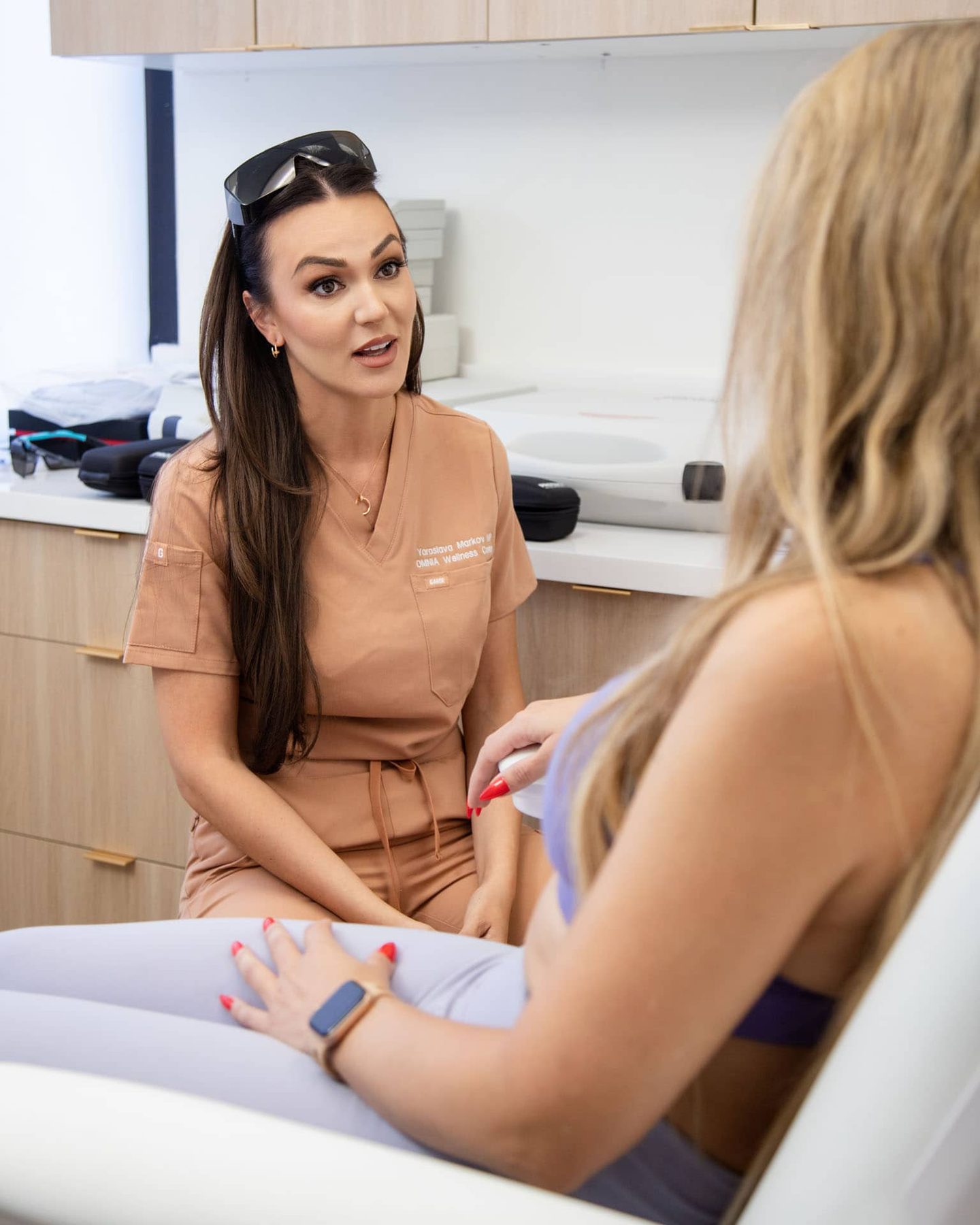
A proper consultation is not a sales speech. It should feel diagnostic. In a strong consultation, the provider evaluates your face in motion and at rest, not just under flattering overhead light. They should look at skin thickness, texture irregularity, pigmentation pattern, lines around the mouth, elasticity, and whether your concerns are really about skin quality or about structure underneath the skin.
You should also expect a conversation about timing. If you have a wedding in four days, that matters. If you have an important presentation tomorrow, that matters too. While many people tolerate this treatment with minimal social downtime, minimal is not the same as none. Some patients flush for a day. Others stay pink longer, especially if the treatment is stacked more aggressively.
If the provider uses the term “little to no downtime,” ask what that means in their office, on actual patients, with your skin type. For one person it means a few hours of warmth and mild redness. For another it means two to three days of visible pinkness and a sandpapery feel.
Preparing for the appointment
Good preparation reduces surprises. Your provider may give office-specific instructions, but these are the kinds of points that commonly come up before a Fotona 4D Laser Facial (TimeWalker) appointment in Encino, CA:
- Avoid active tanning and heavy sun exposure in the days leading up to treatment.
- Pause irritating skincare if advised, especially strong retinoids, exfoliating acids, and harsh scrubs.
- Mention any history of cold sores, because preventive medication may be appropriate for some patients.
- Arrive with clean skin unless your office tells you otherwise.
- Do not schedule it immediately before a major event unless you are comfortable with some temporary redness or texture.
That last point gets overlooked. Even when a treatment is considered low downtime, your first session is not the time to gamble before photos, filming, or a big dinner.
What check-in feels like on treatment day
The appointment itself usually starts quietly. Photos are often taken first, sometimes from several angles. These matter more than most patients think. Skin changes happen slowly, and memory is a poor measuring tool. A result that feels modest at week two may look much more impressive when compared side by side with baseline images a couple of months later.
Your skin is then cleansed thoroughly. Some practices apply topical numbing, some do not, and some reserve it for selected areas or specific protocols. The intraoral portion in particular sounds intimidating to first-timers, but many patients describe it as unusual rather than painful. The sensation is often heat with pressure, not sharp pain.
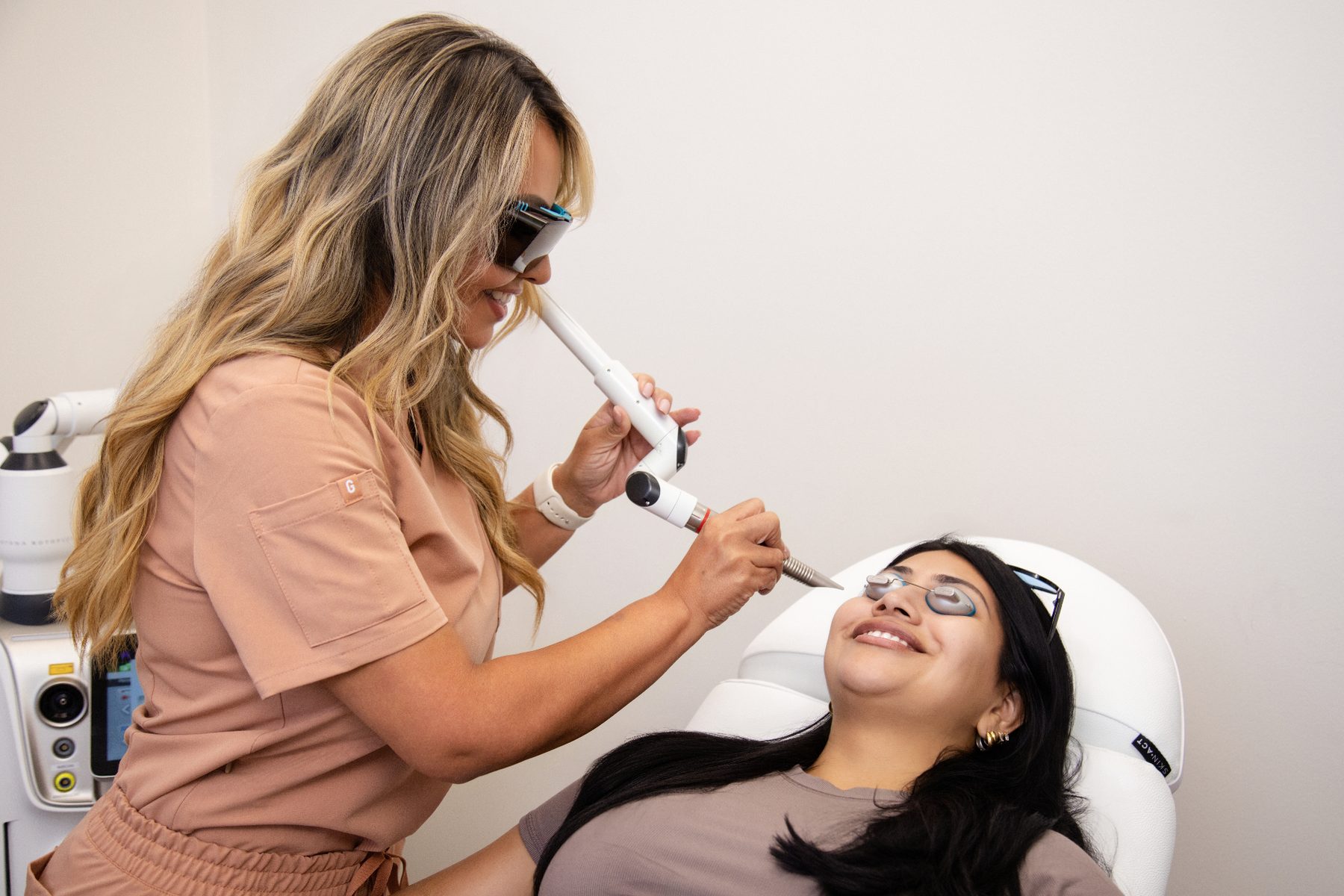
Eye protection is used for the external laser passes. You may hear snapping sounds, short bursts, or fan noise depending on the handpiece and settings. There is often a faint warm smell when superficial skin work is done. That is normal in laser treatment, though it catches people off guard if nobody mentions it beforehand.
The four-dimensional part, without the jargon
What makes this treatment distinctive is the sequence. Rather than one uniform pass, it usually moves through different depths and purposes.
The intraoral step works from inside the mouth to target tissue around the perioral area and lower face. Patients are often surprised by this part because it sounds more intense than it feels. There can be heat and a stretching sensation, but it is generally brief. This internal approach is one reason the treatment is associated with subtle support and tightening around the mouth.
Another step focuses on deeper thermal stimulation. The goal here is collagen remodeling. This is not the flashy part you see in the mirror the same day, but it is often the part that matters most over time. Tissue heating is where a lot of the gradual firmness comes from.
A more superficial pass may then address texture and fine lines. Depending on settings, this can create a warm prickly feeling. Some patients compare it to rubber-band snaps, others say it feels like a hot brush moving across the skin. Pain tolerance varies widely, and the provider’s technique matters. In experienced hands, discomfort is usually manageable and paced well.
The final polishing step is often what leaves the skin looking fresher in the short term. This is where many patients notice that cleaner, smoother surface look after the initial redness settles.
Does it hurt?
Usually less than people fear, but more than a classic spa facial. That is the honest answer.
The intensity depends on your sensitivity, the settings used, whether numbing was applied, and which part of the face is being treated. Around the mouth tends to feel stronger than the cheeks. Areas where the skin is thinner can sting more. If the treatment includes a more robust superficial resurfacing component, you will likely feel it.
Most patients can get through it without much trouble. A few need breaks, especially during a first treatment when every sensation is unfamiliar. I have found that the patients who do best are the ones who understand that discomfort tends to come in short waves. The feeling builds, peaks, and passes. Fotona 4D Laser Facial (TimeWalker) Encino, CA It is rarely one long continuous burn.
If you are very anxious about pain, say so at the consultation. A good office will tell you how they manage comfort rather than brushing the concern aside.
Right after treatment
Immediately after your session, the skin usually looks flushed, similar to a brisk workout or sun exposure. There may be mild swelling, especially around the cheeks or under the eyes, and the skin may feel warm for a few hours. Some people notice a dry, tight, lightly rough texture by the next day.
This roughness is one of the most common surprises. Patients expect peeling if a laser is doing something meaningful. Fotona 4D does not always produce dramatic visible peeling, but it can leave the skin feeling a bit sandpapery as it turns over. Makeup may sit differently for a day or two. That does not mean something went wrong. It usually means the skin is moving through its recovery cycle.
Social downtime varies. Some patients look normal enough the next day with tinted sunscreen. Others prefer two to three days before being in front of a camera. Your baseline redness, skin sensitivity, and treatment intensity all influence that.
The first week, what is normal and what is not
The first week is mostly about patience. Day one often brings redness and warmth. By day two or three, the heat is gone but some dryness or bronzed texture can appear. Around day four or five, many patients start to see the payoff, a smoother surface, more even light reflection, and a rested look that is hard to describe until you see it.
What should make you call the office? Significant swelling that worsens rather than improves, blistering, unusual pain, crusting beyond what you were warned about, or any sign of infection. Those are not expected routine findings. Mild redness, tightness, tenderness, and rough texture usually are.
One of the more practical things to know is that skincare can sting more than usual after treatment. Products you use every day without issue may suddenly feel active. That is why aftercare tends to be boring on purpose. Bland cleansers, gentle moisturizers, strict sun protection.
Aftercare that protects your result
Most offices tailor aftercare to the settings used, but the broad principles are simple:
- Keep the skin calm with gentle cleansing and a straightforward moisturizer.
- Use sunscreen consistently and avoid direct sun exposure while the skin is recovering.
- Hold off on scrubs, exfoliating acids, and retinoids until your provider says your barrier is ready.
- Skip hot workouts, saunas, or anything that adds heavy heat if you were advised to avoid them.
- Let any roughness resolve naturally instead of picking, rubbing, or over-treating it.
Patients sometimes undermine a perfectly good treatment by trying to speed up peeling or layering on too many “recovery” products. More is rarely better in the first few days.
When you will see results
There are really two timelines to keep in mind. The first is the quick glow phase. Once the redness settles, the skin often looks cleaner, smoother, and a little more refined. That can show up within days.
The second timeline is the collagen phase. This is slower. Firmer feel, subtle tightening, and improvement in fine lines tend to evolve over several weeks and sometimes months, depending on your age, skin condition, and whether you are doing a series.
This is where expectations need precision. One session can absolutely make a visible difference, especially if your concerns are mild and your skin still has good regenerative capacity. But patients looking for stronger tightening usually do better with a planned series. A provider who tells every patient that one treatment is enough is oversimplifying.
How many sessions people usually need
There is no universal number that fits every face. Some patients use Fotona 4D as periodic maintenance and are pleased after a single session. Others commit to a short series for more cumulative improvement. The right plan depends on how much laxity is present, whether texture or pigment is a bigger issue, and how your skin responds.
A younger patient with mild early changes may be thrilled after one or two treatments. A patient with more visible creasing around the mouth and moderate laxity may need several sessions and still be best served by combining treatments over time. Sometimes that means pairing laser work with neuromodulators, filler, microneedling, medical-grade skincare, or biostimulatory treatments. Sometimes it means recognizing that surgery is the only route to a truly dramatic lifting result.
That is not a failure of the laser. It is simply matching the tool to the problem.
How it compares with other treatments patients ask about
People in Encino often compare Fotona 4D with microneedling, radiofrequency, IPL, or fractional lasers. The key difference is that Fotona 4D is designed as a layered rejuvenation treatment rather than a single-purpose intervention.
Microneedling can be excellent for texture and certain scar patterns, but it does not feel the same and does not offer the same intraoral component. IPL is useful for redness and pigment, yet it is not a tightening treatment in the same way. More aggressive fractional resurfacing can produce stronger changes in texture and lines, but usually with more downtime and a different risk profile.
The practical question is not which treatment is best in the abstract. It is which treatment best matches your current skin, your tolerance for downtime, and the result you care about most.
Choosing the right provider in Encino
The machine matters less than the judgment behind it. A well-trained provider knows when to push and when not to. They can adjust based on skin type, hydration, baseline inflammation, and your treatment history. They also know how to avoid overpromising.
When evaluating an office for a Fotona 4D Laser Facial (TimeWalker) in Encino, CA, pay attention to how the consultation feels. Are your questions answered directly? Does the provider discuss limitations as well as benefits? Do they explain what they would do if your skin tends to pigment or react strongly? Are before-and-after images consistent in lighting and angle?
Those details tell you far more than a generic claim about “state-of-the-art technology.” Plenty of poor outcomes happen with excellent devices used without enough nuance.
The most common misconceptions
One misconception is that “non-surgical” means “effortless.” It does not. Non-surgical usually means less downtime and less risk than surgery, but it still requires good candidacy, preparation, aftercare, and realistic goals.
Another misconception is that no peeling means no result. That is not true either. Some beneficial laser effects are happening below the surface and unfold gradually, without dramatic visible shedding.
The last misconception is that all glow equals tightening. Patients sometimes love the immediate polished look and assume that is the final result. The surface improvement is real, but the structural changes take longer. Looking glowy at day three and looking firmer at week eight are related, but not identical, outcomes.
A realistic picture of your first appointment
If you are the kind of person who likes to know exactly what lies ahead, here is the most realistic summary. You will likely spend more time on prep, photos, and discussion than you expect. The treatment itself will probably feel warm, active, and occasionally sharp, but generally tolerable. You may look flushed afterward and feel dry or tight for a few days. The early reward is smoother-looking skin. The later reward, if you are a good candidate and the treatment plan fits your needs, is gradual refinement that looks believable in daylight.
That last point matters. The best laser work does not advertise itself. Friends may say you look rested, healthier, or somehow more put together without being able to name why. For many patients in Encino, that is exactly the point.
A first Fotona 4D Laser Facial should not feel mysterious. It should feel informed, intentional, and appropriate for your skin. If your consultation gives you that sense, you are already in a much better position to decide whether it is the right next step.
OMNIA Wellness Center
16430 Ventura Blvd Ste 207, Encino, CA 91436
Phone: +1 818-386-8511
FAQ About Fotona 4D Laser Facial (TimeWalker) Encino, CA
What is a Fotona laser good for?
Fotona lasers support several different aesthetic protocols. The Fotona 4D facial uses two wavelengths and four treatment modes to address concerns such as fine lines, skin texture, and mild laxity. OMNIA Wellness Center offers the TimeWalker facial with an individual consultation. Suitability and likely improvement depend on the person's skin and goals; results are not guaranteed, and this treatment does not reproduce a surgical facelift.
How much does a Fotona laser treatment cost?
The cost depends on the treatment protocol, areas treated, number of sessions, and provider's assessment. Ask OMNIA Wellness Center for a current written quote that explains what is included, whether follow-up is included, and any proposed package terms. An individualized estimate is more useful than assuming that one advertised price applies to every facial treatment.
How much downtime is there after a Fotona laser procedure?
Recovery varies with the specific protocol and intensity. Fotona describes its 4D facial as having little to no downtime, but temporary redness or sensitivity can occur, and a stronger surface treatment can require more recovery. Ask the treating clinician what to expect from the planned settings, how to care for the skin afterward, and when to contact the clinic with concerns.